Upcoming event
-



First, choose an event o a place to visit
Select the date from the calendar and indicate the number of people to send your booking request.
You will be contacted by our staff. Thank you.
Fill out the form with your data to confirm your booking.
Thank you. Your booking code is {{codice}}, we have sent a summary email to the address {{email}}
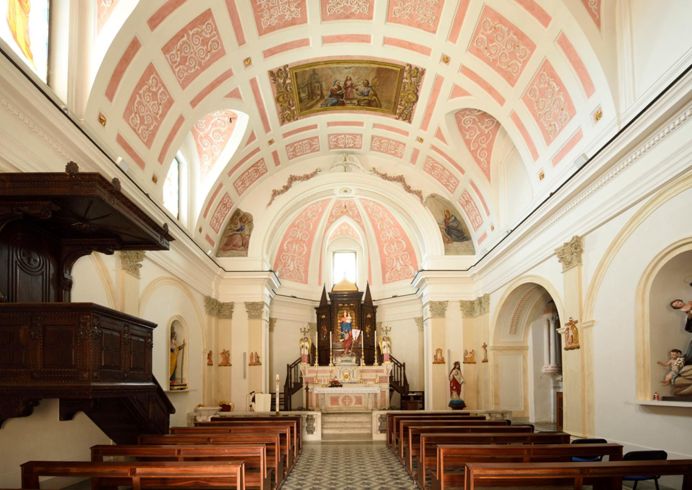

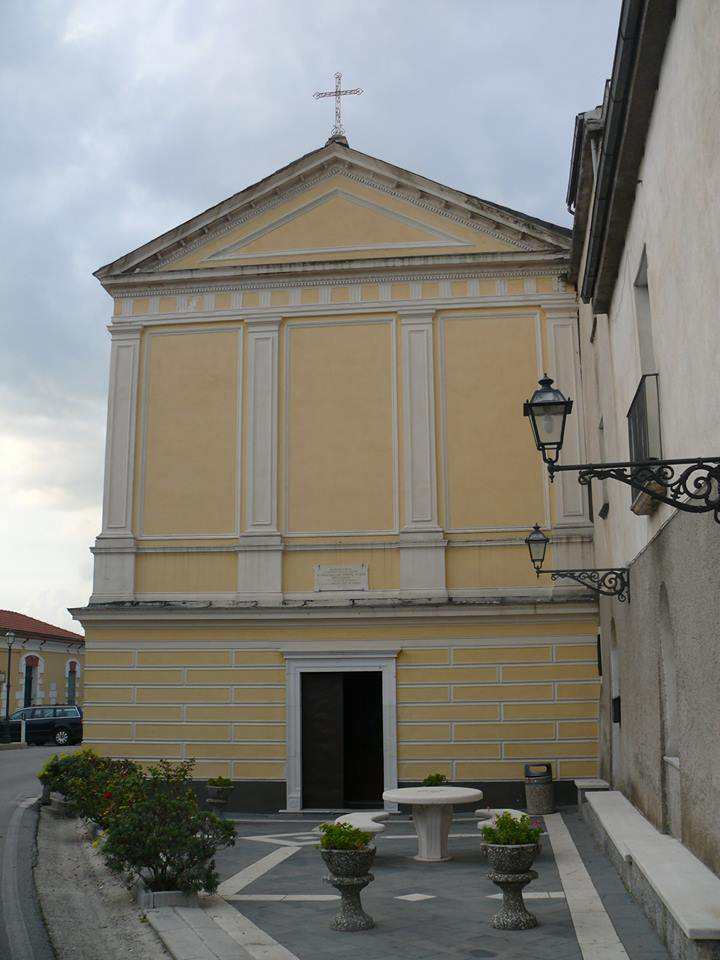
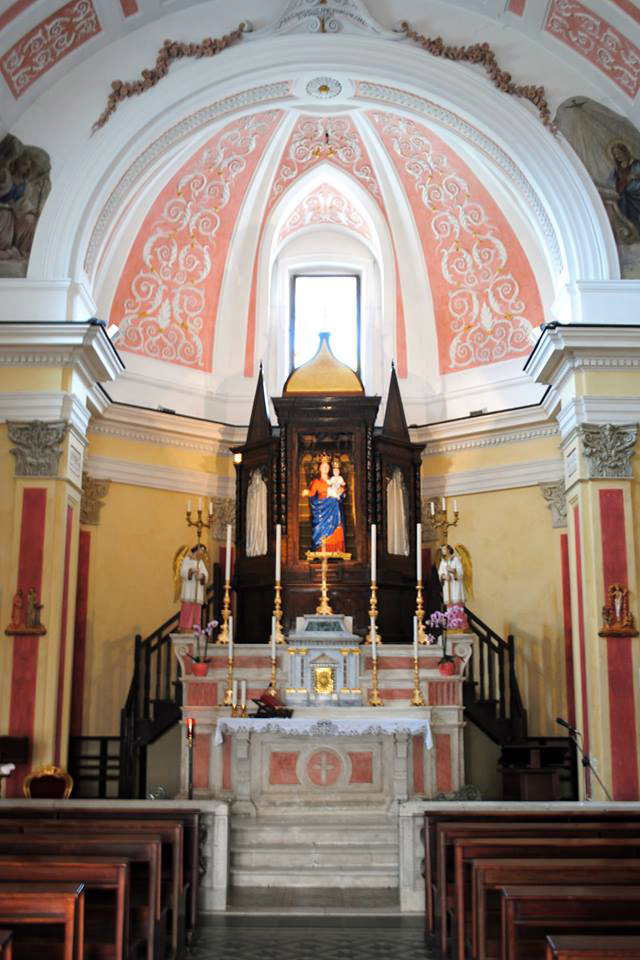
The Church of Santa Maria di Loreto, founded in 1628, is located along provincial road no. 103, which passes through the hamlet of Arenabianca in the municipality of Montesano. It is located on a bend in the road, oriented parallel to it, and served by a small space in front, created by rotating the longitudinal axis of the sacred building (1871), which previously faced directly onto the road without any space for protection.
The church currently consists of a single, rectangular hall of modest size. Its long (west) side flanks the road, on which the old openings (a simple 1628 portal in local stone and two symmetrical windows) have been bricked up. The other (east) side features a small nave set within a larger building containing the sacristy on the ground floor and the rectory and library on the upper level. The south side features a façade with a single entrance, while the north side ends with a polygonal apse flanked by a sturdy bell tower.
The elevated structures are constructed with brickwork in rows or beds, resting on the rock and covered with plaster. The terracotta roof, supported by a wooden truss structure, is double-pitched over the nave and segmented over the apse. There are no particular buttress walls or buttresses.
The interior space is divided by a triumphal arch that delimits the slightly elevated apse area, and two asymmetrical arches on the long side that provide access to the small nave, which is in turn divided into three rooms of different shapes and sizes and connected by arches. The three rooms are arranged as you enter on the right: the small room is connected to the adjacent building by a small door and staircase, not visible from the nave; A middle room or chapel of Our Lady of Sorrows (probably the site of the original presbytery, dating back to before the church’s axis was rotated), with a Padula stone altar and a tripartite inlaid wooden altarpiece above it, featuring a central icon of the Black Madonna and two figures of saints in the lateral compartments. A larger space, the chapel of the Sacred Heart, features a Padula stone altar, dated on the base to 1780, and is surmounted by a small stucco temple with a central niche and a statue of the Sacred Heart. This room connects to the old sacristy (currently disused) and service areas.
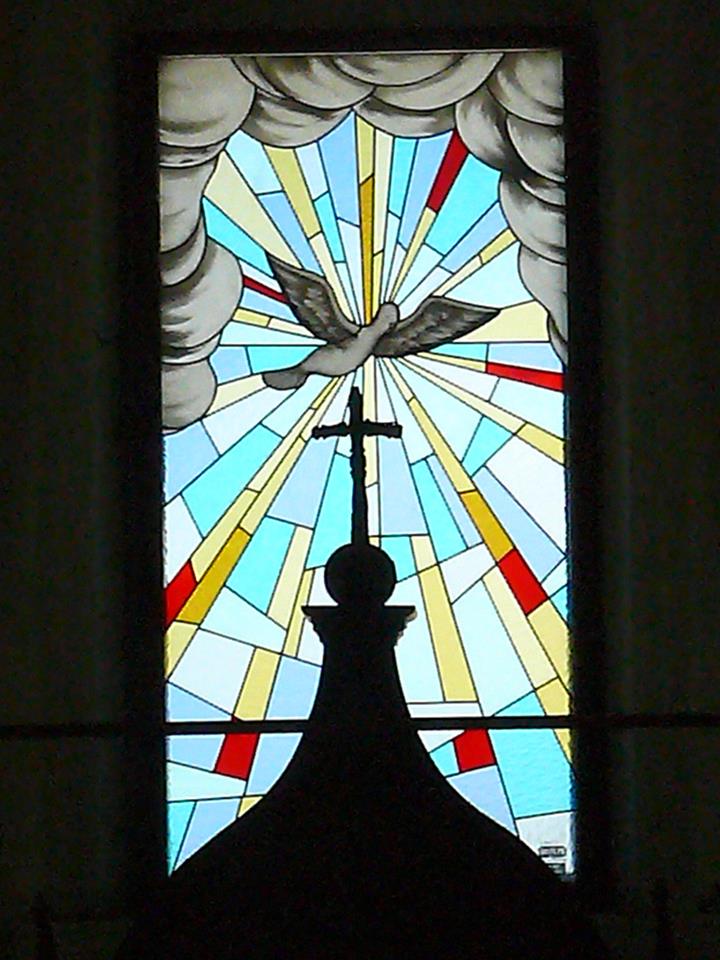
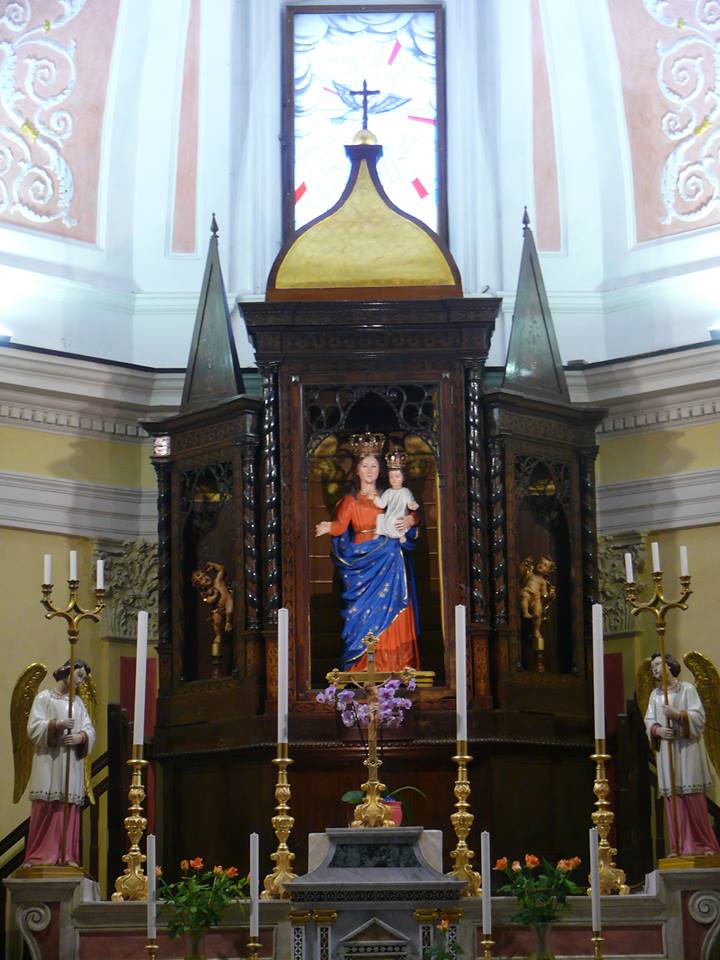
The presbytery area exploits the limited space of the apse, which houses the high altar with a frontal and reredos in variously colored stucco, raised on stone ledges. It extends partially into the main hall, where a stone balustrade defines its overall dimensions. Above the high altar stands a small carved wooden temple, served by two more modern wooden staircases, containing a statue of the Virgin. There are no liturgical modifications.
The wall, to the left as you enter, features a niche with Saint Teresa, an ancient wooden cusped baptistery, a wooden pulpit suspended on corbels with a staircase and a canopied roof, and another niche with Saint Joseph.
The counterfaçade features a concrete choir loft with a masonry balustrade, complete with a small mechanical pipe organ with a single keyboard (not functioning), surmounting a recently constructed wooden entrance door.
The clerestory, apse basin, side walls, and false ceilings are all decorated with imaginative and tastefully colored stucco, organized with small vaults: barrel vaults with groined arches over the central nave, umbrella vaults over the apse basin, and dome vaults over the aisles of the side nave. The floors are made of polished grit with geometrically interwoven designs.
(Italiano) Parrocchia di Riferimento
Santa Maria di Loreto
Parroco/Rettore: sac.Don Fernando Barra
Contatti: 3477162040
email: biblio.parrocchiale@libero.it
now links ancient hill and mountain paths, comprising 17 circular itineraries located in the area's various towns and hamlets. The trail offers breathtaking views of the Vallo di Diano and allows visitors to explore the area's ecclesiastical cultural heritage, beginning with the early Christian Baptistery of San Giovanni in Fonte.